
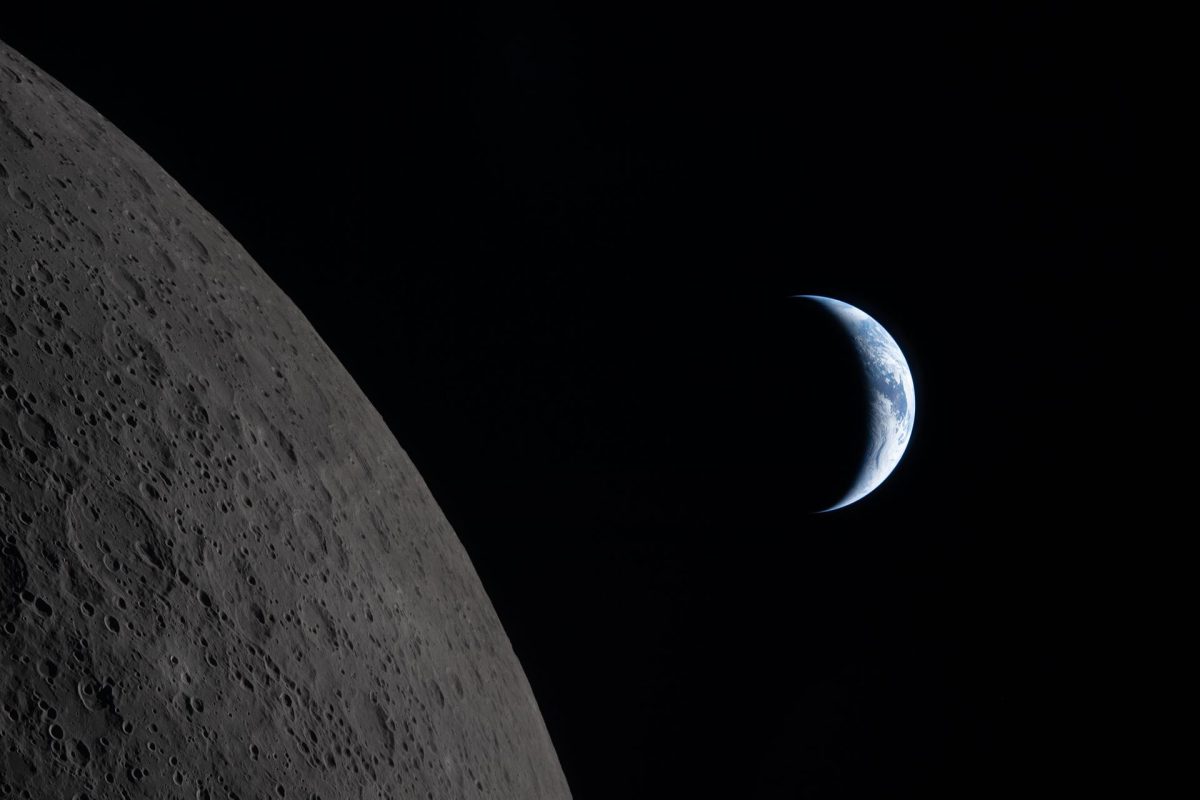
On the morning of April 1, 2026 the crew of the Artemis II Launch waited to take off from the Kennedy Space Center. Spectators gathered, waiting to watch history unfold. This mission represents a major step forward for NASA as it works to send humans back to the Moon for the first time in decades. The anticipation in the air was filled with excitement, nervousness, and a hope for the future of space exploration.
At the heart of this mission are the astronauts chosen to travel aboard Artemis II. Ried Wiseman, Victor Glover, Christina Hammock Koch, and Jeremy Hansen left earth to test deep space systems and pave the way for lunar surface missions. Each crew member brought unique skills, experience and determination. But with an important mission like this, it comes with intense training due to the unique and dangerous situation.
An article by NASA says, “Unlike missions to the International Space Station, Artemis II offers no nearby safe harbor and no option to be back on Earth within hours of a problem. Training reflects that reality. Crews are prepared not just to follow procedures, but to understand spacecraft systems well enough to adapt when conditions change.” Their mission was not just technical–it is a symbol of humanity’s return to deep space.
Once in space, the crew experienced weightlessness as they enter orbit. The spacecraft follows its planned trajectory. According to NASA, they broke the record for the farthest human space flight, “Four astronauts aboard NASA’s Artemis II test flight around the Moon made history at 12:56 p.m. CDT on Monday, traveling 248,655 miles from Earth, surpassing the record for human spaceflight’s farthest distance previously set by the Apollo 13 mission in 1970.” Inside, the astronauts adjust to life in microgravity, conducting tasks and observing the vastness of space around them. Through the windows, Earth appears smaller, while the Moon grows closer.
The purpose of Artemis II was to test systems and prepare for future lunar landings and missions to mars. The mission will evaluate spacecraft performance, navigation, and crew operations in deep space. Every moment of the journey provided valuable data that will help shape upcoming missions.
after the mission, on April 10 at 5:07 p.m., they splashed down back to earth. Recovery teams moved quickly to secure the spacecraft and welcome the astronaut’s home. In an interview with USA Today after the mission, Ried Wiseman commented on what It was like to see earth from space, “I don’t know what we all expected to see, it was the most spectacular moment, and it paused all four of us in our tracks.”.
The Artemis II mission marks a significant milestone in human space exploration. It proved that humans are ready to travel beyond Earth once again and lays the groundwork for future missions to the Moon and beyond. As the astronauts returned home, they brought with them not only scientific knowledge, but also inspiration for generations to come.












Alton Ferris
May 5, 2026 at 8:04 am
It only took fifty years to get back to this point after the initial moon landing, how much longer before we have successfully gotten humans onto mars?
Traegon
Apr 27, 2026 at 8:04 am
It’s so interesting how fast we are evolving and moving to other planets