
At Rocky Mountain High School, the hum of keyboards, the shuffle of papers, and the occasional burst of laughter create a rhythm unique to the school’s newspaper classroom. Here, students are more than just writers. They are editors, reporters, and collaborators, crafting stories that capture the heartbeat of their school.
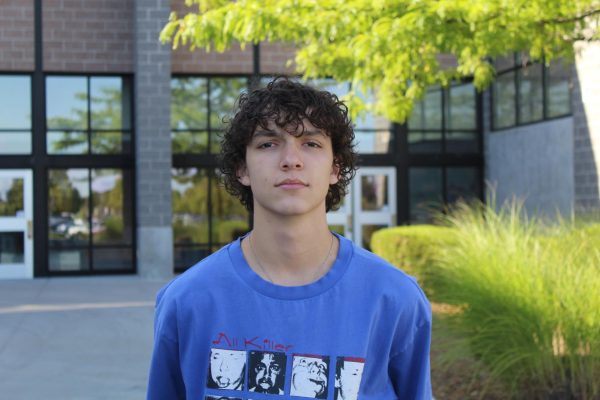
For some, like freshman Aiden Grey, the journey into journalism was accidental. “I got put into this class. I didn’t really schedule this. I don’t really like it much, it’s pretty hard,” Grey admits. Despite the initial hesitation, he has learned the importance of collaboration and guidance. “I ask my editor for mainly everything, and then he helps me. I make the story,” he says. Even with a flexible approach, “I just go with the flow.” Grey finds value in teamwork. “To make a story, I work with my editor, that’s like the teamwork,” he explains.
For others, the newspaper class is a passion project. Finleigh Cassel, who deliberately chose the class, describes it as a chance to dive deep into what interests her. “I think about one of the most popular things going on right now, and I figure out who is most passionate about it and that’s who I interview,” she says of her story development process. Cassel follows a structured routine: outlining, interviewing, writing, editing, and finally publishing. She credits her classmates for shaping her work. “They’ve given me a multitude of ideas, which is very helpful, and I don’t think I could be as good of a writer without my classmates,” she reflects.
Editing and refining these stories requires a sharp eye for detail. Hadley Griggs, an editor with multiple years of experience in the class, emphasizes the challenge of finding a unique angle. “I like to pick an angle on the story that’s different and not something you’re going to read over and over again,” she says. Griggs also notes the difficulties of sourcing accurate information. “When you interview people and they don’t necessarily answer in the way you want or try to make it sound better than it is, that’s always hard,” she explains. Editors and writers work together to cross-check facts, compare multiple sources, and ensure credibility, keeping the newsroom’s work trustworthy.
Teamwork extends beyond fact-checking. The newspaper room operates as a tightly knit collaborative environment, where writers and editors support each other throughout every stage of a story. “We help each other get photos and interviews for each other,” Griggs says. “We all know that we’re working together, and that’s kind of what makes us successful.” Even students like Grey, who initially approached the class reluctantly, come to appreciate the shared effort.
The process of producing the newspaper mirrors real-world journalism practices, requiring organization, communication, and time management. Cassel, for example, starts with outlining, then interviews, writes the draft, and revises before publishing. Griggs uses her own mental checklist to manage multiple stories and deadlines. “I know what I’ve got done, and this is what I need to get done next,” she says.
Research confirms the importance of these skills in student journalism. According to a 2022 report by the Student Press Law Center, high school newspapers provide students with opportunities to develop critical thinking, writing, and collaborative skills, all while navigating ethical reporting challenges similar to professional journalists. These skills, learned in the hectic but supportive environment of the newspaper room, prepare students for college and beyond.
Despite the challenges, students in Rocky Mountain High’s newspaper class find fulfillment in their work. For Grey, the learning experience is practical and grounded in teamwork. For Cassel, it is a way to pursue a passion and refine her craft. For Griggs, it’s a chance to guide others and ensure quality storytelling. Together, they create more than just a school newspaper, they build a learning community where creativity, diligence, and collaboration thrive.
As the classroom quiets at the end of the day, the clatter of keyboards fades, but the lessons of journalism linger. In every interview conducted, every story edited, and every deadline met, students gain not just bylines but confidence, skills, and a shared sense of accomplishment that extends beyond the walls of the newsroom.