
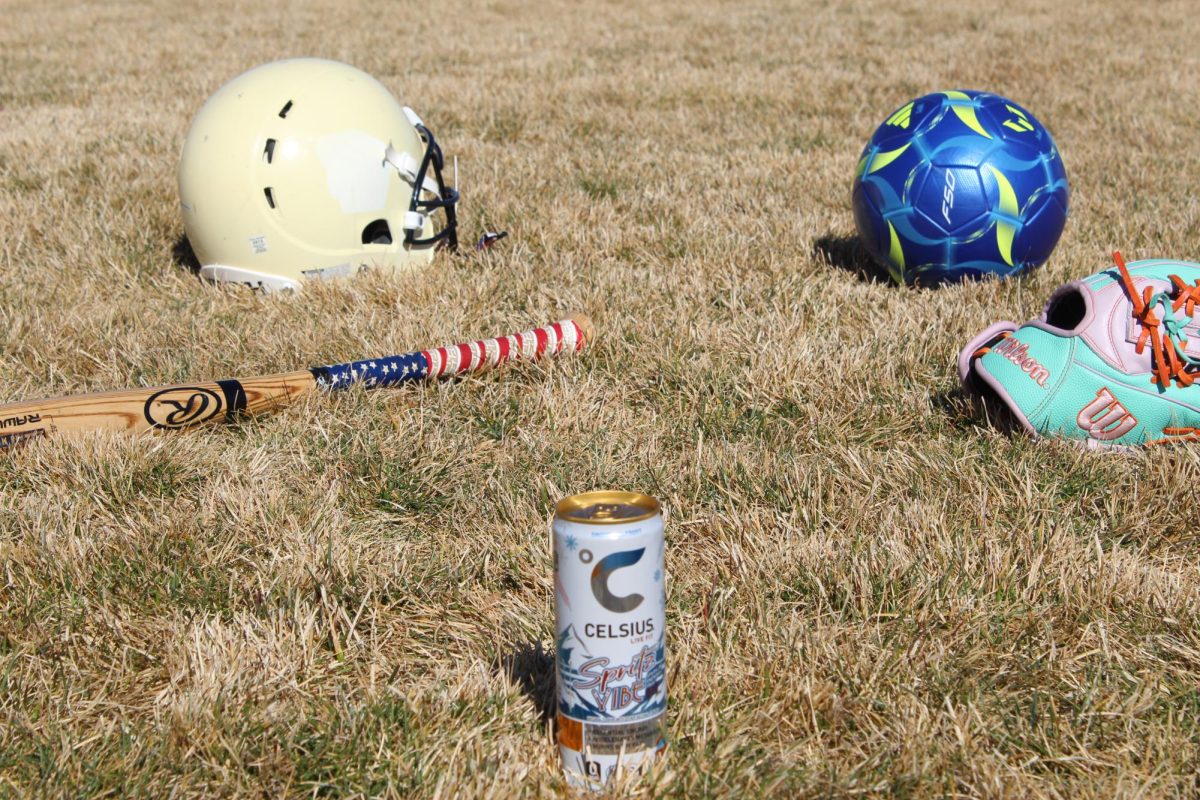
“Fuel you can feel good about,” says Celsius, a notable energy drink company. Let’s be honest: caffeine seems to be a fundamental part of our day, something to look forward to and something that supports our lifestyle. Brands have told us that our performance is better with caffeine than without, both at school and in a game. But how much of the caffeine is actually helpful?
Many students at Rocky can be found with an energy drink. One of those students, Koya Paulsen, a freshman rugby player for Rocky, was asked how many energy drinks she consumes daily. She said, “two to three red bulls a day.” That is over three hundred milligrams a day! According to the FDA, “Depending on factors such as body weight, medications you may take, certain medical conditions, and individual sensitivity, ‘too much’ can vary from person to person.”
Reading this provides more information that goes unnoticed. People consume massive amounts of caffeine, not realizing that only certain people would need it. If you find yourself smaller in size or more fit, shouldn’t that mean consuming less caffeine? But what if you’re exerting more of that energy due to early morning and late nights, practices and staying awake for academic purposes?
Others have found that the addictive stimulant is a non-crucial part of their lifestyle. Henry Mayborn, a sophomore basketball player at Rocky, said, “I’d rather get energy from natural resources. Caffeine is harmful and easily addictive.”
This is interesting, because according to the article Addiction Center, “Caffeine resembles the molecule so much that it can fit neatly into the brain cells’ receptors for adenosine, effectively blocking them off. Normally, the adenosine produced over time locks into these receptors and produces a feeling of tiredness.”
This creates a lack of tiredness. If you ask any high-school student how many hours of sleep they get, you’ll often find it is less than 8, and 10 is the recommended amount! This creates the addictive circle: lack of sleep, drinking an energy drink, not being tired when it is time for sleep, not sleeping enough… and the cycle repeats.
So how does this affect our student athletes? Well, previously it was recognized that students drink energy drinks to produce more energy and productivity, but the energy is obviously fake. It’s a temporary feeling that creates a cycle of not-so-temporary use. Our student athletes here at Rocky spend most of their time focusing on sports, which can make it hard to stay engaged at school.
It might be time to take a break from the cycle and rethink how much caffeine we need. Student athletes already push their bodies to the limit – early practices, late games, long school days – and relying on artificial energy can mask the real issue. When the body is exhausted, it doesn’t need another can. It needs rest.




noble jones
Apr 27, 2026 at 8:05 am
I didn’t know that caffeine was that crazy. I’m glad to know that caffeine shouldn’t be a go to anymore.
reed
Apr 27, 2026 at 7:58 am
I liked learning about the effects of caffeine and what they do to the brain
Sofia Bobodzhanov
Apr 15, 2026 at 10:53 am
It was great to learn about the effect of caffeine at school!
Bradey Main
Apr 14, 2026 at 8:01 am
This article is amazing. I love how it talks about the effects caffine can have on your body. It really digs deep to show you how much people need caffine cause they have ruined their cycle